Butterfly House
Friends of Hashawha Bear Branch Butterfly House
Our butterfly house is located across the road from the nature center next to the new parking area. It is the first public butterfly house in Carroll County!
A native butterfly house is a seasonal outdoor exhibit. It is a mesh structure filled with native plants that serve as butterfly and moth “host plants". You can observe the complete lifecycle of native butterflies and moths throughout the season.
FHBB’s Butterfly House was built through a Carroll County Recreation and Parks grant and the generous donations of many local residents. Donate to our our PayPal account to help cover the costs of maintenance and plantings.
If you want to volunteer with the butterfly house, please visit our Volunteer page or Attend a Meeting to learn more.
It’s Butterfly House Season!
Saturday, June 20th @10am-1pm
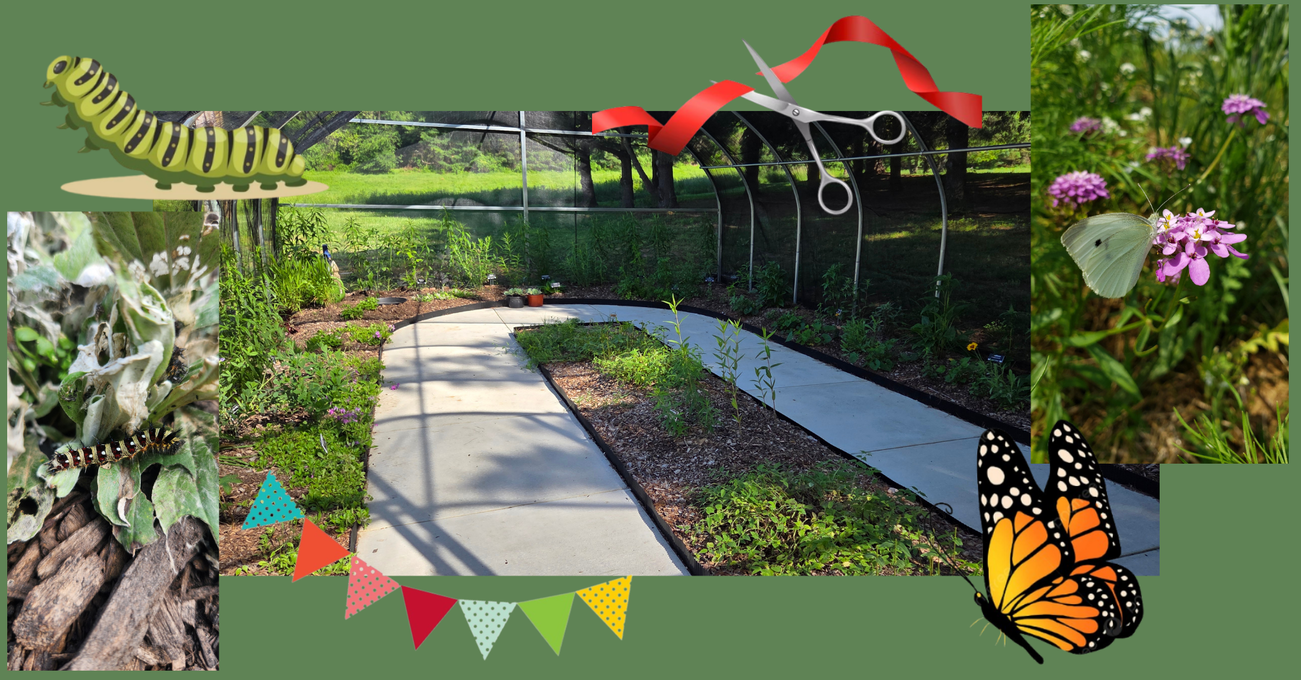
It's official - the Hashawha Butterfly House will open to the public on Saturday, June 20th!
The flowers are blooming, the caterpillars have started to munch, and the butterflies are beginning to flit through the air! As this is the first year the house has been open, please be patient with the volunteer docents. We are striving to be open every Saturday from 10am - 1pm, but please feel free to call the Nature Center to confirm before heading out (410-386-3580). Peak butterfly activity will most likely be in August, but if you visit throughout the season, there will always be something new to check out!
Summer of Swallowtails
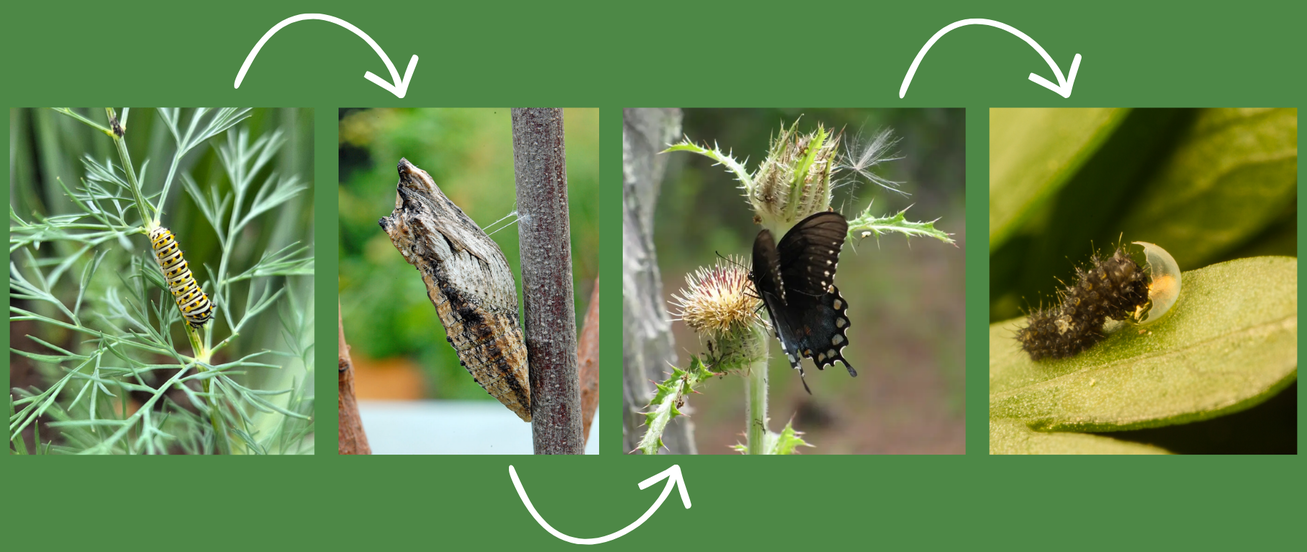
Planning on visiting FHBB’s butterfly house this summer? You might be able to observe the entire life cycle of a swallowtail butterfly! Right now there are some black swallowtail caterpillars in the garden. These caterpillars feed on any plants in the carrot family which includes parsley, dill, and Queen Anne’s lace. After three or four weeks these caterpillars will create their chrysalis which may be green or brown. Black swallowtails typically pupate for 10-20 days before emerging. Ready to spread their wings and fly just a few hours later, these butterflies can be identified by the rows of yellow and blue spots across the bottom of their wings. The current generation of black swallowtails will lay the eggs that will hatch later this summer. This second generation will overwinter in their chrysalises and emerge next spring, starting the life cycle all over again.